
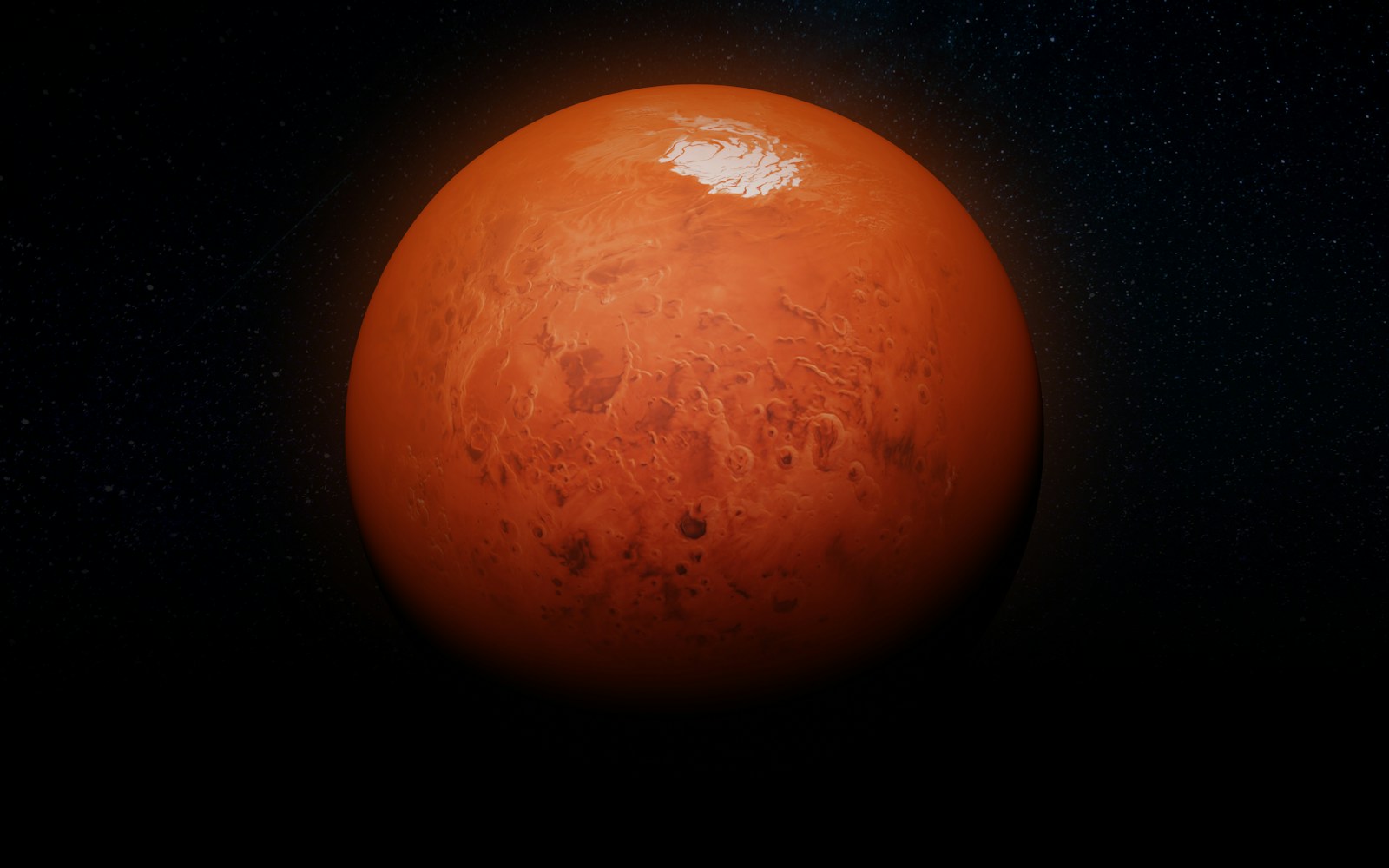
Mars has long captured the human imagination. It’s our neighboring red planet, visible to the naked eye and tantalizingly Earth-like in some ways. But could we actually live there?
The dream of living on Mars combines science, technology, and survival instinct. Space agencies and private companies are investing billions to find out, from NASA’s long-term missions to Elon Musk’s vision of a self-sustaining Martian city. Yet the realities of its thin atmosphere, harsh radiation, and limited resources make it one of humanity’s most significant challenges.
The Harsh Truth About the Martian Environment
At first glance, Mars seems promising: it has a 24.6-hour day, polar ice caps, and seasons like Earth. But beneath that familiarity lies a hostile world. Temperatures average around -80°F (-60°C), the air is 95% carbon dioxide, and surface pressure is less than 1% of Earth’s.
Without protective gear, a human would lose consciousness within seconds. And then there’s radiation. Mars lacks a magnetic field and thick atmosphere, exposing its surface to cosmic rays that could damage human DNA over time.
Even gravity poses challenges. Mars’ gravity is only 38% of Earth’s, and long-term exposure could weaken bones and muscles. Living there means adapting, both biologically and technologically, to a planet that doesn’t want us.
Building a Home on a Hostile Planet
To survive, future settlers would need airtight habitats—essentially mini-Earths. NASA and other agencies are experimenting with domes made from Martian regolith (local soil), 3D-printed into protective structures that block radiation and withstand dust storms.
Inside these habitats, life-support systems would recycle air, water, and waste. Hydroponic and aeroponic gardens could grow food using LED light, while microorganisms might help process nutrients and break down waste.
Power would likely come from a mix of solar panels and small nuclear reactors. Every element, from oxygen production to plumbing, must be designed for self-sufficiency, since resupply missions from Earth would take months and cost millions.
Even small leaks or power failures could prove catastrophic, making redundancy and automation essential.
The Psychological Frontier
Living on Mars isn’t just a physical challenge; it’s a mental one. Isolation, confinement, and distance from Earth would test even the strongest minds. Communication delays of up to 22 minutes each way mean conversations can’t happen in real time, creating emotional distance as well as physical.
NASA has studied these effects through Earth-based simulations in locations such as Hawaii and Antarctica. Crews report mood swings, tension, and “Earth withdrawal,” a longing for the sensory richness of home. Designers of future missions are considering ways to counteract this through virtual reality, social contact, and psychological support.
Human adaptability is remarkable, but so is the strain of isolation. Surviving Mars means conquering loneliness as much as the environment.
Why We Keep Reaching for the Red Planet
So why do it at all? Beyond scientific curiosity, Mars represents something deeply human: the drive to explore and endure. Colonizing another planet could ensure humanity’s survival if a catastrophe struck Earth. It’s also a test of ingenuity. It provides a chance to prove we can not only visit other worlds, but build a future there.
The first humans on Mars will face extremes unlike anything humanity has ever experienced. But every great frontier has begun with impossible odds. If we succeed, the red planet could become humanity’s second home and the most significant milestone in our exploration story.