
Some of humanity’s most transformative ideas never made it into textbooks. Behind every smartphone, airplane, or antibiotic lies a chain of lesser-known breakthroughs. These quiet inventions that shaped modern life rarely get credit.
From ancient tools to early technologies that sparked revolutions, these forgotten innovations reveal how progress often comes from the margins, not the spotlight. The world as we know it exists because of countless small inventions that worked behind the scenes to change everything.
The Paper That Built Civilization
Long before the printing press revolutionized knowledge, paper made it possible. Invented in China around 105 A.D. by court official Cai Lun, paper replaced heavy bamboo and expensive silk as a writing medium. It spread across Asia, the Middle East, and eventually Europe, democratizing information and paving the way for literacy, bureaucracy, and science.
Without paper, there would be no books, newspapers, or even modern currency. Yet while the printing press gets most of the glory, it was the humble invention of paper that built the foundation for global communication.
The Screw Thread and the Hidden Mechanics of Progress
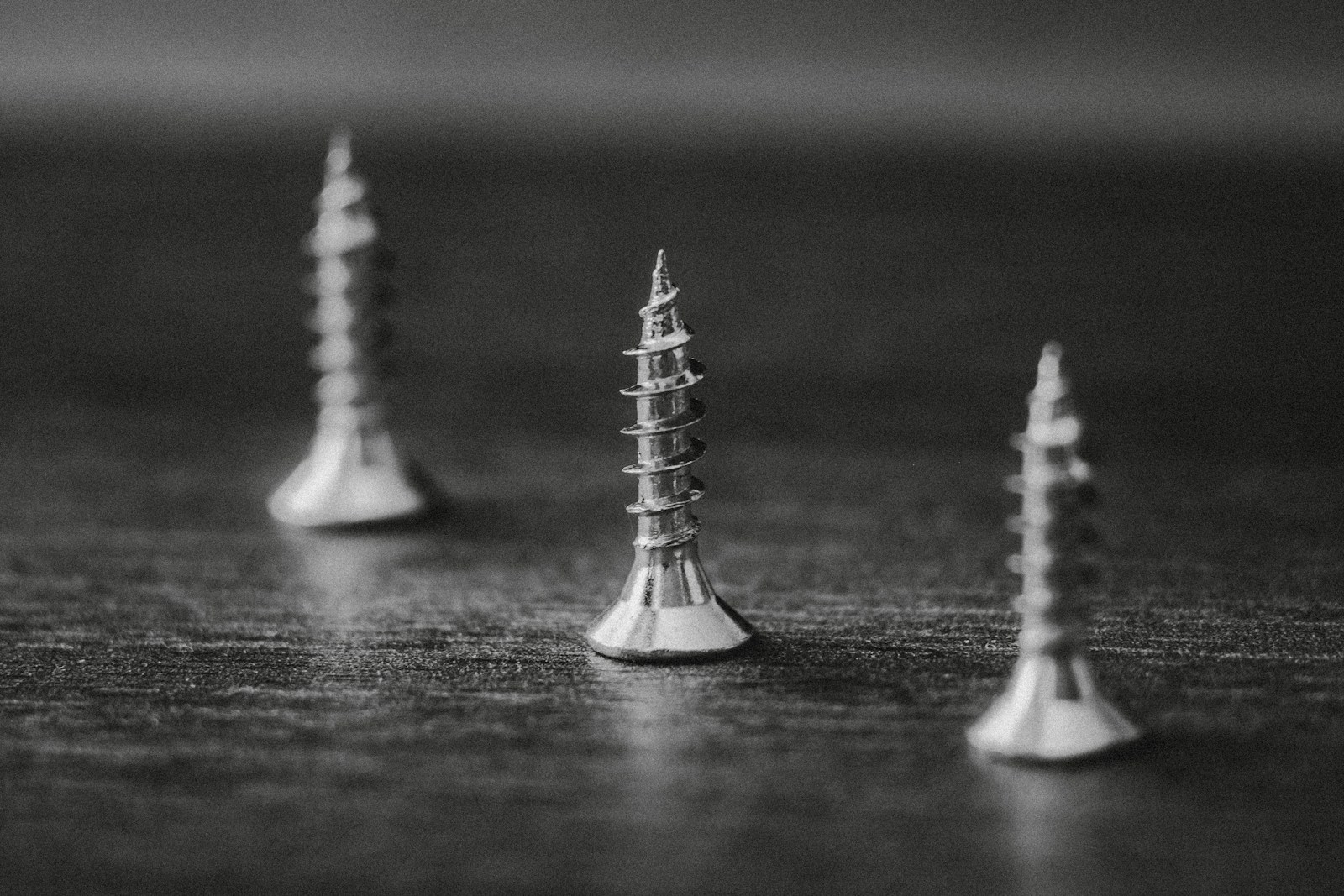
Few people think of the screw thread as revolutionary, but it’s one of the most significant mechanical advances in history. Dating back to ancient Greece, threaded screws enabled everything from presses and pumps to modern engines and skyscrapers.
The concept of rotational force converting into linear motion. It was simple yet elegant, and transformed construction, transportation, and industry. Leonardo da Vinci called it one of the “miracles of geometry,” and he wasn’t wrong.
The threaded screw also inspired the modern bolt, bottle cap, and even the precision instruments that launched space exploration. A slight design twist, repeated over centuries, became the backbone of mechanical progress.
The Safety Elevator: The Unsung Hero of Cities
In the mid-1800s, American inventor Elisha Otis changed the shape of cities with a straightforward promise: safety. His 1853 invention of the safety elevator, which featured a brake system that prevented free fall, made tall buildings practical for the first time.
Before Otis, elevator ropes occasionally snapped, making multi-story construction risky. His innovation allowed architects to build upward without fear, ushering in the age of skyscrapers.
While we remember names like Edison and Tesla, it was Otis’s quiet contribution that redefined urban life and made modern skylines possible.
The Accidental Discoveries That Stuck
Not all world-changing inventions were intentional. In 1928, Alexander Fleming left a petri dish of bacteria uncovered and discovered penicillin, the first proper antibiotic. Similarly, in 1903, Marie and Pierre Curie’s experiments with radioactivity laid the groundwork for medical imaging, radiation therapy, and nuclear energy.
Even the microwave oven began as a fluke: engineer Percy Spencer noticed a candy bar melting in his pocket while working near radar equipment. One spark of curiosity led to a kitchen revolution.
These accidents remind us that innovation often thrives in chaos and that discovery favors the observant mind over the planned experiment.
The Inventions That Fade but Never Die
Many forgotten inventions still live on, reimagined in new forms. Ancient Roman concrete, for example, used volcanic ash, which allowed structures like the Pantheon to survive for millennia. Only recently have scientists rediscovered its self-healing properties, inspiring the development of eco-friendly modern cement.
Similarly, early windmills and waterwheels, precursors to today’s renewable energy systems, show that the past often holds blueprints for the future. Forgotten doesn’t mean obsolete; it means waiting to be rediscovered.
Every great leap in history rests on invisible steps. For every Edison or Einstein, countless inventors quietly changed the world, one overlooked idea at a time.