
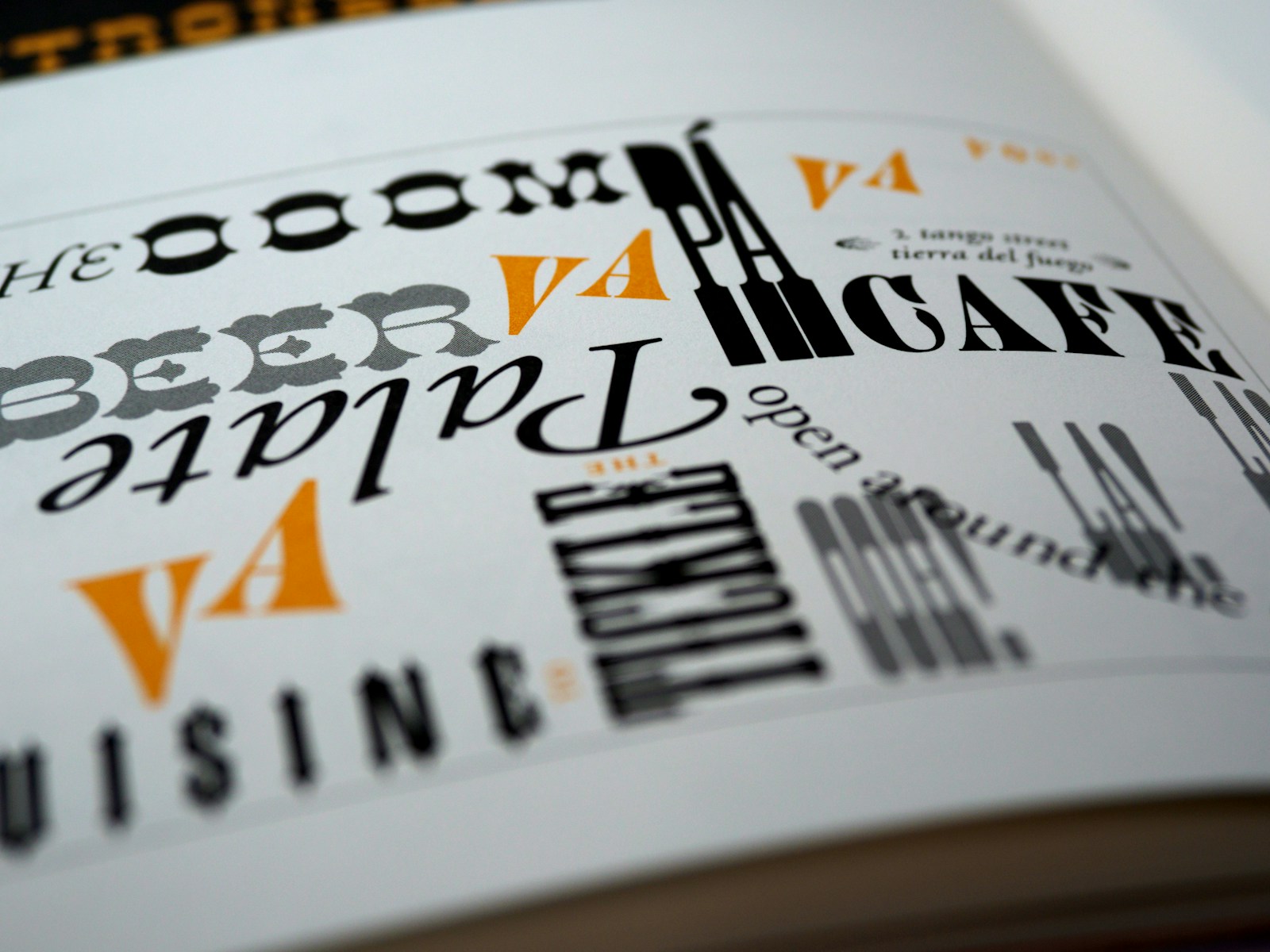
Before you even read a word of an ad, your brain has already formed an impression, and the font has everything to do with it.
Typography doesn’t just communicate words; it communicates tone. Whether sleek and modern or soft and nostalgic, fonts trigger emotions, shape trust, and subtly guide how you feel about a brand.
From Apple’s minimalist sans-serif to Coca-Cola’s elegant script, typography is brand psychology in visual form. The letters themselves speak, and what they say can determine whether you click, buy, or scroll away.
The Psychology of Typography
Fonts tap directly into the emotional and associative parts of the brain. Researchers at MIT and the University of South Carolina have shown that typography influences perceived credibility, warmth, and even product taste.
- Serif fonts—those with decorative “feet” on the ends of letters, such as Times New Roman, convey tradition, reliability, and authority. They’re often used by institutions, publishers, and luxury brands seeking timelessness.
- Sans-serif fonts—clean, modern, and minimalist, such as Helvetica or Arial, signal clarity, innovation, and trustworthiness. Tech companies favor them to project efficiency and simplicity.
- Script fonts evoke elegance, intimacy, or creativity, depending on their flow. They’re popular among brands selling romance, artistry, or nostalgia.
- Bold or geometric fonts suggest confidence and power, often used in athletic or fashion branding to convey energy and impact.
The takeaway? Fonts are visual metaphors. They don’t just represent words; they shape how those words feel.
How Fonts Build (or Break) Trust
When you interact with a brand, you subconsciously judge its tone before you read the message. Typography acts as a personality cue, much like body language in conversation.
A financial firm using Comic Sans would feel unserious. A children’s toy company using rigid, corporate fonts might seem cold. The right typography bridges this gap between message and meaning, reinforcing consistency and emotional coherence.
In studies of digital readability, participants reported higher trust and engagement when the font “matched” the content’s intent. Inconsistent fonts, by contrast, caused confusion or cognitive dissonance, even when the words themselves were positive.
In branding, that mismatch is the equivalent of smiling while delivering bad news; it just feels wrong.
Emotional Branding Through Design
Typography works alongside color, imagery, and layout to form what psychologists call affective design, visual elements that evoke emotional response. A brand’s chosen font becomes part of its signature, just like a jingle or logo.
Think of Disney’s whimsical curls, The New York Times’ gothic authority, or Nike’s clean, confident sans-serif. Each conveys personality instantly, even without words attached. Fonts help brands express identity through emotion, rhythm, and visual memory.
What’s fascinating is how minor variations can change perception. Rounded fonts feel friendlier; angular ones feel assertive. Wide spacing suggests openness, while tight kerning conveys urgency. Every typographic choice is a psychological cue, intentional or not.
Why Fonts Matter More Than Ever
In a digital world where attention spans are measured in seconds, first impressions depend heavily on visual storytelling. Fonts aren’t just decorative; they’re strategic tools for connection.
For individuals and creators, choosing the right typography for a resume, portfolio, or website can influence how others perceive professionalism and confidence. For brands, fonts build emotional resonance long before the product even appears.
The next time you scroll past an ad, pay attention to the letters themselves. Are they whispering trust or shouting energy? Are they evoking nostalgia, power, or calm? Typography isn’t just about how text looks. It’s about how it feels. And in a crowded world of messages, feeling is what we remember most.